Japan

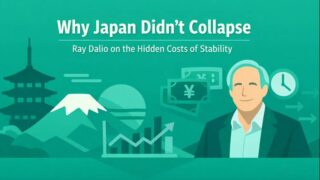
Japan’s Quiet Equilibrium

Why hasn’t Japan gone broke? Using Ray Dalio’s debt cycle framework, this report explains Japan’s high-debt equilibrium, monetary repression, and long-term risks.
Invest

The Choice Not to Break

Ray Dalio devotes a standalone chapter to Japan in How Countries Go Broke. This report explains why Japan avoided collapse—and the long-term costs of low growth, silent adjustment, and intergenerational burdens.
Japan

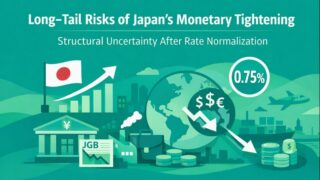
Long-Tail Risks of Monetary Tightening in Japan

This academic report analyzes the long-tail risks of Japan’s monetary tightening, focusing on structural uncertainty, expectations, fiscal sustainability, and global spillovers.
Japan

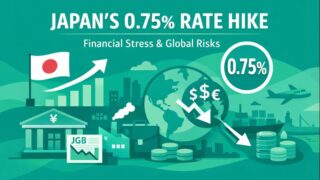
Macro-Financial Stress Scenarios Following

Japan’s interest rate normalization may trigger credit tightening, yen volatility, and global spillovers. A macro-financial risk analysis for policymakers and investors.
Japan

Global Macro Economist Report

The U.S. extension of sanctions exemptions for Sakhalin LNG is not a technical adjustment, but a structural shift in sanctions economics. This report analyzes its implications for Japan, inflation, energy markets, and alliance stability.
Japan

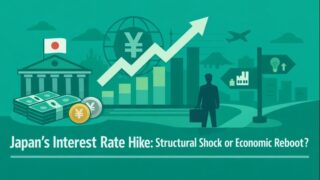
The Nature of the Shock to the Japanese Economy from Rising Interest Rates

Japan’s interest rate hike marks a structural shift, not a financial crisis.This economist’s report explains the real shock, sector impacts, and long-term implications for growth, yen dynamics, and fiscal discipline.
Global Economy

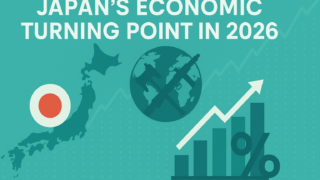
World Economic Turning Point in 2026

In 2026, Japan faces a structural economic turning point as monetary normalization, China risk, and geopolitical fragmentation converge. This report analyzes the silent selection reshaping Japan’s growth model beyond zero interest rates.
Global Economy

Why Japan Is a “Silent Systemic Risk”

An economist’s analysis of Japan through Ray Dalio’s Big Cycle framework, explaining why yen stability, JGB functionality, and dollar liquidity could converge into a systemic risk.
Global Economy

Ray Dalio’s Framework for the Next Systemic Crisis

Ray Dalio explains why the next global financial crisis will emerge from the convergence of debt limits, political fragmentation, and geopolitical conflict—beyond traditional Lehman-style shocks.
Global Economy

Geopolitical Risk as a Structural Macro-Financial Variable

The ECB’s reverse stress test signals a paradigm shift in bank supervision, elevating geopolitical risk from a tail event to a core macro-financial variable shaping capital, liquidity, and systemic stability.
GOLD

Global Reserve Currency Outlook

This analysis explores how the U.S. dollar is transforming amid rising fiscal burdens, the weaponization of finance, U.S.–China strategic rivalry, and amplified global liquidity cycles. A must-read for economists and institutional investors.
AI

Taiwan Contingency: Ten Plausible Scenarios

This report outlines ten realistic Taiwan contingency scenarios, explaining how military, cyber, economic, and political pressures could shape a future crisis between China, Taiwan, and the United States.
AI

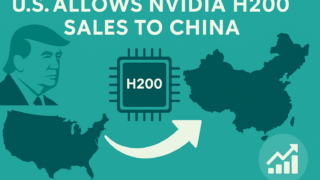
U.S. AI Semiconductor Policy Shifts from “Blockade” to “Managed Competition”

This report analyzes why U.S. policymakers are shifting from AI chip bans to controlled exports, how China intends to leverage H200 access, and what these changes mean for NVIDIA, data centers, and semiconductor markets.